The Fragile Window: Safe Socialization Strategies for Juvenile Dogs During Fear Periods

For many dog owners, the “Fear Period” feels like a sudden betrayal. One day you have a confident pup, and the next, they are cowering at a flapping leaf or barking frantically at a friendly neighbor. This isn’t a training failure; it is a biological milestone.

In canine development, fear periods are evolutionary survival mechanisms. However, in our modern world, these windows are incredibly delicate. During these times, dogs are prone to Single-Event Learning—a phenomenon where a single negative experience can create a lifelong phobia. Navigating this “fragile window” requires a shift from traditional training to proactive emotional management.

Introduction: What is a Fear Period?

Fear periods are distinct phases where a dog’s brain becomes hyper-sensitized to perceived threats.

  • The First Fear Period (8–11 Weeks): Occurring during the initial puppy socialization window, this phase coincides with the time puppies usually leave their mothers. Nature designed this to keep “bold”

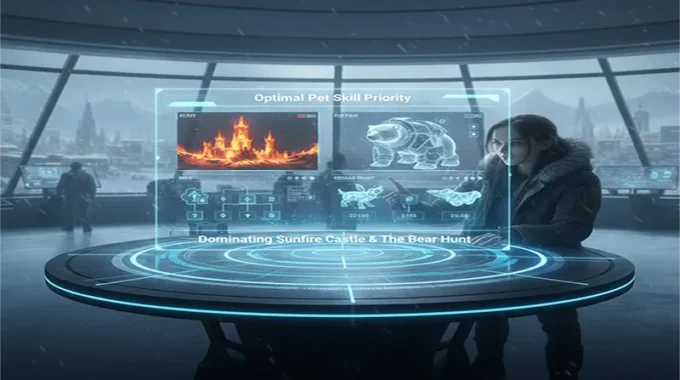
Optimal Pet Skill Priority: Dominating Sunfire Castle and the Bear Hunt

In the competitive landscape of 2026 Whiteout Survival, the difference between a top-tier player and a mid-range contender often comes down to the granular optimization of the Pet System. Pets are no longer passive companions; they are highly customizable engines of war. However, the biggest mistake a player can make is building a “generalist” pet.

A pet that tries to do everything will fail in the two most critical arenas: the Bear Hunt, which demands pure, unadulterated Damage Per Minute (DPM), and Sunfire Castle, which requires a complex balance of Burst Damage and Garrison Survivability. To dominate, you must specialize.

The Dual-Meta of 2026

The mechanical requirements for these two events are diametrically opposed.

  • The Bear Hunt is a “static” encounter. The Bear does not kill your troops; therefore, any skill points spent on Defense, Health, or Damage Reduction are mathematically wasted.
  • Sunfire

Beyond the Walk: Daily Mental Enrichment Routines for High-Energy Juvenile Dogs

If you own a high-energy juvenile dog—a Husky, a Border Collie, or a spirited mixed breed—you have likely experienced the “Athlete’s Paradox.” You take your dog for a five-mile run, hoping to tire them out, only to find that you’ve merely created a more conditioned athlete who is ready to go again ten minutes later.

Physical exercise is vital, but for an adolescent dog, it is often just a warm-up. Their bodies are resilient, but their brains are hungry. To truly settle a high-energy dog, you must move beyond the walk and tap into their Biological Fulfillment.

The Physics of High Energy

High-energy dogs aren’t just physically fast; they are cognitively “loud.” Their brains process environmental data at a higher frequency than lower-energy breeds. When we only provide physical outlets, we ignore the neural pathways that require exhaustion.

The physiological cost of mental work is significant. While we cannot …

Apex Predators: Mastering the Snow Leopard and Iron Rhino for Rally Leadership

In the high-stakes environment of 2026 Whiteout Survival, the role of a Rally Leader has evolved. Gone are the days when simply having the highest “Base Attack” was sufficient to steamroll an opponent. The current meta is defined by Damage Mitigation, Lethality scaling, and Garrison Breaching.

To lead a successful rally against a reinforced Sunfire Castle or a maxed-out Facility, a leader must master two distinct “Apex Predators”: the Snow Leopard and the Iron Rhino. While the Leopard is your surgical blade, designed to shred troops with high-velocity strikes, the Rhino is your sledgehammer, built to crack the toughest shells.

The Snow Leopard: The Surgical Striker

The Snow Leopard remains the premier offensive pet for one reason: it scales better than any other beast when your Lethality is high.

Savage Bash and the First Strike

The Leopard’s core skill, Savage Bash, provides a massive …

Optimal Energy: The High-Quality Nutrition Guide for Growing Juvenile Large Breed Dogs

When raising a Great Dane, Saint Bernard, or even a robust Golden Retriever, the instinct for many owners is to “power-feed.” There is a persistent myth that a massive dog requires a massive amount of calories to reach its potential. However, in the world of veterinary nutrition, “high calorie” is often the enemy of the juvenile large breed dog.

Unlike small breeds, which require calorie-dense fuel to prevent energy crashes, large and giant breeds require Controlled Growth Rates. If these dogs grow too quickly, their skeletal system cannot keep up with their rapidly increasing body mass, leading to irreversible damage.

The Large Breed Paradox

The paradox of large breed nutrition is that while they will eventually be huge, they must get there slowly. Feeding a “standard” high-calorie puppy food to a juvenile giant breed can trigger a metabolic sprint. This rapid growth puts immense pressure on immature growth plates …