

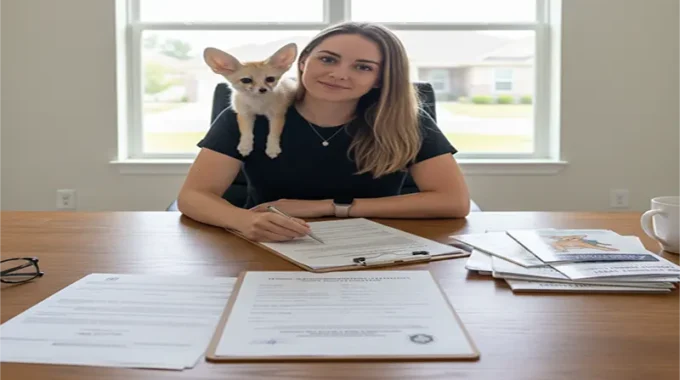
The allure of the fennec fox (Vulpes zerda) is undeniable. With their oversized ears, kitten-like energy, and desert-dwelling mystique, they are often cited as the “ultimate” exotic pet. However, beneath the surface of social media videos lies a daunting, high-stakes framework of regulations.
Owning a fennec fox is not merely a matter of finding a breeder; it is a complex legal commitment. Because these animals are classified as non-domesticated wildlife, their presence in your home is governed by a patchwork of federal, state, and local laws that are in a constant state of flux. In the exotic pet world, “legal” does not mean “easy,” and “illegal” often leads to a heartbreaking conclusion: the confiscation and potential euthanasia of the animal.
The Jurisdictional Hierarchy: Who Makes the Rules?
To understand if you can legally own a fennec fox, you must navigate three distinct layers of government.
1. Federal Oversight (USDA)
At the federal level, the Animal Welfare Act (AWA), enforced by the United States Department of Agriculture (USDA), regulates those who breed, sell, or exhibit exotic animals.
- The Breeder: Any reputable fennec fox breeder must hold a USDA Class A or B license. Buying from an unlicensed breeder is often a violation of federal law.
- The Owner: Generally, a private “pet” owner does not need a USDA license. However, the moment you take your fox to a school for a presentation or post monetized videos of it on social media, the USDA may classify you as an “exhibitor,” requiring a Class C License.
2. State Regulations
This is where most owners encounter hurdles. States generally fall into three categories:
- Strictly Prohibited: States like California, Hawaii, and Washington essentially ban the private possession of fennec foxes.
- Permit Required: States like Florida and Illinois allow ownership but require specific “Captive Wildlife” permits.
- Unregulated: A shrinking number of states (like Nevada) have few state-level restrictions, though this is often overridden by local laws.
3. Local and Municipal Law
Even if your state says “yes,” your city or county can say “no.” Many municipalities have “Dangerous Dog” or “Wild Animal” ordinances that specifically name the family Canidae (which includes foxes). Furthermore, Homeowners Associations (HOAs) and landlords have the legal right to prohibit exotic animals regardless of state permits.
The Permit Application Process
In “Permit Required” states, obtaining a fennec fox is an administrative marathon. While the process varies, a standard application for a Captive Wildlife Permit typically involves the following:
- Background Check: You must demonstrate a clean record, particularly regarding animal cruelty or wildlife violations.
- Documentation of Origin: You must prove the fox was captive-bred and purchased from a licensed dealer.
- Experience Hours: Some states (like Florida) require a specific number of documented hours working with the species or a related family before a permit is granted.
- The Site Plan: You must submit a detailed diagram of your home and enclosure, proving the animal cannot escape and that the public is protected.
Documents You Will Need:
- Completed State Application Form and Fee.
- Copy of the Breeder’s USDA License.
- A signed “Letter of Veterinary Commitment” from an exotic vet.
- Proof of escape-proof caging (Photos/Blueprints).
Caging and Husbandry Standards
Most permits are not “perpetual”; they are contingent on the owner maintaining specific housing standards. Legally, fennec foxes are high-flight risks.
State inspectors often look for:
- Enclosure Size: Minimum square footage requirements (e.g., a $10′ \times 10’$ outdoor run or a dedicated indoor room).
- Double-Entry Systems: A “safety vestibule” or two-door system to ensure that if the fox slips past the first door, it is still contained within a secondary area.
- Substrate Depth: Because fennecs are master diggers, outdoor enclosures often require a concrete base or buried chain-link fencing to prevent the fox from tunneling out.
Insurance and Liability
One of the most overlooked legal requirements is Exotic Pet Liability Insurance. Standard homeowner’s insurance policies almost universally exclude “wild animals.”
If a fennec fox bites a guest or an intruder, you are personally liable for all medical costs and potential legal damages. Without a specialized rider, your homeowner’s insurance could be canceled entirely upon the discovery of the fox. Furthermore, some states require proof of a minimum $100,000 to $250,000 liability bond before a permit is issued.
The Lacey Act: Crossing State Lines
If you live in Ohio and buy a fennec fox from a breeder in Oklahoma, you have entered the territory of the Lacey Act. This federal law makes it a crime to transport or sell wildlife in violation of state, federal, or tribal law.
If you bring a fox into a state where it is prohibited—or even into a state where it is legal without the proper import permits—you are committing a federal offense. Always secure an “Import Permit” from your state’s Fish and Wildlife agency before the animal crosses the border.
Summary Table: Key State Stances (2026)
| State | Legal Status | Agency | Permit Requirement |
| Florida | Legal w/ Permit | FWC | Class III Captive Wildlife Permit |
| California | Prohibited | CDFW | Illegal for private citizens |
| Texas | Legal | County-based | Varies by county (Local “Dangerous Wild Animal” law) |
| New York | Prohibited | DEC | Illegal (specifically prohibits all non-domesticated canids) |
| Illinois | Legal w/ Permit | IDNR | Requires an exotic animal permit and vet sign-off |
The Hidden Legal Trap: The Rabies Protocol
⚠️ LEGAL WARNING: The Rabies Catch-22
There is currently no USDA-approved Rabies vaccine for fennec foxes. While vets often use the “off-label” canine vaccine, it holds zero legal weight.
If your fennec fox bites a person and the authorities are notified, the law in almost every state treats the fox as an “unvaccinated wild animal.” Because the only way to “prove” a wild animal doesn’t have rabies is to test brain tissue, the fox will likely be seized and euthanized for testing, regardless of its previous vaccination history.
The Lifetime of Legality
Owning a fennec fox is a 12- to 15-year commitment to red tape. Laws regarding exotic animals are increasingly restrictive; a city council meeting next month could theoretically change your pet’s status from “legal” to “grandfathered” or “contraband.”
To be a responsible owner, you must not only provide specialized care but also serve as a meticulous record-keeper. Staying legal is the only way to ensure that your fox stays in your home rather than in a state-mandated facility.