
As we navigate 2026, the pet food landscape is undergoing a radical transformation. For decades, “novel protein” meant searching for increasingly exotic mammals—duck, venison, or even kangaroo. But for many dogs with severe Atopic Dermatitis or Inflammatory Bowel Disease (IBD), even these alternatives eventually trigger an immune response.
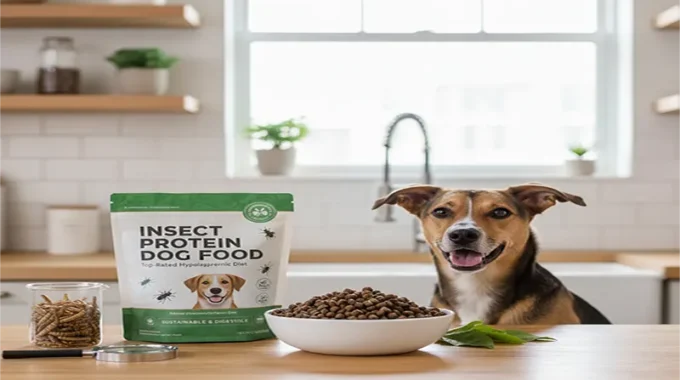
Enter the “Cricket Revolution.” Entomophagy—the practice of eating insects—is no longer a niche survivalist tactic; it is the cutting edge of veterinary clinical nutrition. Insect protein offers a biological “blank slate” for the canine immune system, providing a high-performance, hypoallergenic alternative that is as good for the planet as it is for your dog’s gut.
The Science of Hypoallergenic Insects
Why do insects succeed where beef and chicken fail? The answer lies in molecular weight and evolutionary exposure. Most food allergies in dogs are IgE-mediated responses to common vertebrate proteins. Because dogs have had almost zero evolutionary exposure to concentrated insect proteins like Black Soldier Fly Larvae (BSFL) or crickets, their immune systems do not recognize these proteins as threats.
Furthermore, insect proteins are highly Bioavailable. Studies have shown that the apparent protein digestibility of BSFL in dogs is comparable to, and in some cases exceeds, that of high-quality beef. With a complete amino acid profile, insects provide all ten essential amino acids required for canine health, particularly $lysine$ and $methionine$, which are crucial for coat repair.
Why Insects? The Triple Benefit
1. Immune System “Reset”
Insect protein acts as a true “stealth” nutrient. When a dog with a “leaky gut” or hyper-sensitized immune system switches to an insect-based diet, the inflammatory cascade often halts almost immediately. This allows the intestinal lining to repair itself without the constant bombardment of familiar allergens.
2. Gut Health and Chitin
Insects bring a secret weapon to the bowl: Chitin. Chitin is the fibrous polysaccharide that makes up the insect’s exoskeleton. In the canine digestive tract, chitin acts as a powerful Prebiotic fiber. It nourishes beneficial gut bacteria like Lactobacillus, which in turn supports a stronger immune response.
3. The Environmental Impact
The sustainability metrics of insect farming are staggering compared to traditional livestock. Producing $1\text{kg}$ of insect protein requires a fraction of the resources needed for $1\text{kg}$ of beef protein.
🌍 Eco-Stat: The Water Gap
To produce $1\text{kg}$ of beef protein, it takes approximately $15,000$ to $22,000$ liters of water. To produce $1\text{kg}$ of insect protein, it requires less than 10 liters. That is a water-saving of over 99%.
Top Rated Brands for 2026
1. Jiminy’s (Cricket & Grub Based)
Jiminy’s has moved from a startup to a market leader by 2026. Their “Cravin’ Cricket” and “Good Grub” lines use crickets and BSFL respectively.
- Best For: Dogs with environmental allergies who need an extra boost of Chitin for skin health.
2. Purina Pro Plan Veterinary Diets (Derm ENT)
This is the clinical “heavy hitter.” Formulated specifically for dermatological and gastrointestinal sensitivities, it uses hydrolyzed insect protein to ensure the molecular weight is below the threshold of immune detection.
- Best For: Diagnostic elimination trials and severe chronic itching.
3. Yora
A pioneer of the “Grub movement” in Europe now widely available globally. Yora uses Black Soldier Fly Larvae combined with oats and potato for an ultra-gentle digestive experience.
- Best For: Senior dogs with sensitive stomachs who require highly digestible, “soft” proteins.
4. Wilder Harrier
Known for their “upcycled” philosophy, they combine insect protein with ingredients like pulp from juice production.
- Best For: The ultimate eco-conscious pet parent who wants to maximize sustainability without sacrificing amino acid scores.
Palatability: Will My Dog Eat Bugs?
One of the biggest hurdles for pet parents is the “ick factor.” However, dogs do not share our cultural biases. Insect meal has a distinctively nutty, “umami” aroma. In palatability trials, dogs have shown no significant preference difference between traditional poultry diets and BSFL-based diets. In fact, many “picky eaters” are drawn to the rich, earthy scent of cricket-based kibble.
Comparison: Black Soldier Fly vs. Cricket Protein
| Feature | Black Soldier Fly Larvae (BSFL) | Cricket Protein |
| Protein Content | Approx. $40\% – 50\%$ (Dry Matter) | Approx. $55\% – 65\%$ (Dry Matter) |
| Fat Profile | High in Lauric Acid (Antimicrobial) | High in Omega-6 Fatty Acids |
| Calcium Levels | Naturally very high | Requires more supplementation |
| Common Form | Kibble & “Wet” Toppers | Kibble & High-Value Treats |
| Sustainability | Elite (Can feed on food waste) | Excellent (Vertical farming) |
Transitioning and Safety: The Shellfish Connection
While insect protein is remarkably safe, there is one clinical caveat: Cross-Reactivity. Insects are arthropods, making them biological cousins to crustaceans like shrimp and lobster. If your dog has a known (though rare) allergy to shellfish, they may react to the Tropomyosin found in insects.
When transitioning, follow a strict 10-day gradual mix. Monitor for “detox” signs such as mild gas, which is often just the gut microbiome adjusting to the new prebiotic chitin fibers.
The Future is Grub-to-Bowl
As we look toward a future of $10$ billion humans and a corresponding increase in the pet population, the traditional “meat-heavy” model of pet food is unsustainable. Insect protein is the bridge between clinical necessity and environmental responsibility. By choosing a “Grub-to-Bowl” diet, you aren’t just solving your dog’s “itchy paw” problem—you’re participating in a global movement toward a more resilient, scientific, and compassionate way of feeding our best friends.