
Living in the urban jungle often means navigating the delightful chaos of a small apartment. You love animals, but the thought of a Labrador doing zoomies in your studio, or a parrot squawking at your neighbours, quickly brings you back to reality. But what if there was a way to have a unique, fascinating companion that fits perfectly into your compact lifestyle?
Welcome to the world of low-maintenance exotic pets – creatures that offer all the wonder of the wild without demanding extensive space, constant attention, or turning your home into a zoo. In this guide, we’ll dive into what “low maintenance” truly means in the exotic pet world and introduce you to some incredible species that are ideal for small apartment living.
The Selection Criteria: Fitting into Your Urban Footprint
Before we introduce our top contenders, let’s clarify our criteria. For an exotic pet to truly thrive in a small apartment and suit a busy professional, it needs to tick a few crucial boxes:
- Small Footprint: Enclosure size matters! We’re looking for animals that are content in habitats measuring a few square feet, not an entire room.
- Minimal Odor: No one wants their apartment to smell like a pet store. These animals are generally clean with proper husbandry.
- Reduced Noise: While some exotic pets can be vocal, our selections aim to keep disruptions to a minimum.
- Limited Daily Handling Requirements: Great for those with a demanding work schedule.
- Manageable Diet & Cleaning: Simple feeding routines and relatively easy habitat maintenance.
Top 5 Exotic Recommendations for Your Apartment
Ready to meet your next fascinating roommate?
1. Crested Geckos: The Chill Tree-Dwellers
If you’re seeking a quiet, arboreal companion that practically cares for itself, look no further than the crested gecko. Native to New Caledonia, these charming lizards boast velvety skin, endearing eyelashes, and a calm disposition.
- Space: A 10-gallon vertical tank is sufficient for a juvenile, upgrading to a 20-gallon vertical tank (or larger) for an adult.
- Temperature: They thrive at typical room temperatures (72-78°F / 22-26°C), eliminating the need for complex heating setups.
- Diet: A pre-made powdered diet (Crested Gecko Diet – CGD) mixed with water forms their primary food source, supplemented with occasional insects like crickets or dubia roaches.
- Care: Daily misting helps maintain humidity, and weekly spot cleaning with monthly full substrate changes keeps their environment pristine. They are largely nocturnal, meaning they’re most active when you’re home to observe them.
2. Isopods (Bioactive Terrariums): Living Art & Mini Ecosystems
Imagine a tiny, self-sustaining world on your desk – a mini forest floor teeming with life. That’s the magic of a bioactive isopod terrarium. Isopods (often called ‘roly-polies’ or ‘pill bugs’) are crustaceans that act as nature’s clean-up crew. While typically kept with other reptiles or amphibians, you can create a stunning, self-contained display just for them.
- Space: A small glass jar or a 5-gallon tank provides ample space for a thriving colony.
- Upkeep: Once established, a bioactive terrarium requires almost zero daily upkeep. The isopods, along with springtails, break down waste, keeping the enclosure clean. You simply mist occasionally and observe.
- Aesthetics: You can create beautiful, miniature landscapes with moss, small plants, leaf litter, and bark, making it a living art piece.
- Interaction: Not for handling, but incredibly engaging to observe.
3. Pacific Parrotlets: The Pocket Parrots
If you crave a feathered friend but dread the drama of a larger parrot, the Pacific Parrotlet is your answer. These tiny dynamos, often called “pocket parrots,” are the smallest of the true parrots. What they lack in size, they make up for in personality – bold, curious, and capable of forming strong bonds.
- Space: A cage measuring at least 18″x18″x18″ is suitable, but bigger is always better. Ensure plenty of perches and toys.
- Noise: While small, they are parrots and can be vocal, emitting chirps and squawks. However, their volume is significantly lower than larger species, making them much more apartment-friendly.
- Social Need: Highly social. If you can dedicate daily interaction, a single parrotlet can thrive. Otherwise, a pair can keep each other company, but they may be less bonded to you.
- Diet: A high-quality parrotlet pellet mix, supplemented with fresh greens, vegetables, and a small amount of fruit.
4. Hognose Snakes: The Drama Queens (of the Good Kind)
Hognose snakes are renowned for their docile nature and entertaining “play dead” antics when startled. Their small size and unique upturned snout make them instantly recognizable and incredibly endearing.
- Space: A 10-gallon tank is often sufficient for most adults, though a 20-gallon long offers more room for exploration.
- Diet: They primarily eat appropriately sized frozen/thawed mice, typically once a week or bi-weekly depending on age and size.
- Temperament: Generally calm and reluctant to bite. Their defensive display involves hissing, flattening their heads (to look like a cobra!), and eventually rolling over and playing dead – all bluff and no fuss.
- Care: Heat lamp or under-tank heater for a basking spot, a water bowl, and a suitable substrate (e.g., aspen shavings). Spot cleaning as needed, with full substrate changes every few weeks.
5. African Pygmy Hedgehogs: The Nocturnal Spiky Sweethearts
With their adorable snouts and charming quills, African pygmy hedgehogs are captivating creatures. Their nocturnal nature makes them an ideal companion for busy professionals who are out during the day and home in the evenings.
- Space: A cage roughly 24″x24″ (or larger) with solid sides to prevent climbing is ideal. They need a solid, quiet exercise wheel for their nightly adventures.
- Temperature: They require consistent warmth (72-80°F / 22-27°C), often necessitating a ceramic heat emitter with a thermostat.
- Diet: Specially formulated hedgehog food, supplemented with small amounts of safe insects (mealworms, crickets) and cooked lean meat/veggies.
- Temperament: Can be shy at first but bond well with consistent, gentle handling. Their quills are a defense mechanism, not an aggressive one.
The Hidden Costs of ‘Low Maintenance’: A Reality Check
While these pets are low-maintenance in daily upkeep, “exotic” often comes with specific initial investments and ongoing considerations:
- Initial Setup: Tanks, lighting (UVB for geckos, heat for snakes/hedgehogs), thermostats, hides, substrate, and decor can add up. Think of it as investing in their entire miniature world.
- Specialized Lighting: Many reptiles and amphibians require specific UVB lighting to synthesize Vitamin D3, crucial for their health. This isn’t just a bulb; it’s a critical piece of equipment.
- Exotic Vet Access: Not all vets treat exotic animals. Researching an experienced exotic veterinarian before you get your pet is vital. Regular check-ups are just as important as for dogs and cats.
- Dietary Needs: While simple, their diets are often specific and sometimes require sourcing live insects or specialized formulated foods.
Apartment-Friendly Tips for Exotic Pet Owners
- Humidity Management: Air conditioning can dry out the air. For animals requiring higher humidity (like crested geckos), investing in a hygrometer and a good quality spray bottle or even an automatic mister is key.
- Odor Control: A clean enclosure is an odor-free enclosure. Spot clean daily, and perform full substrate changes as recommended for your specific pet. Activated carbon filters in terrarium lids can also help.
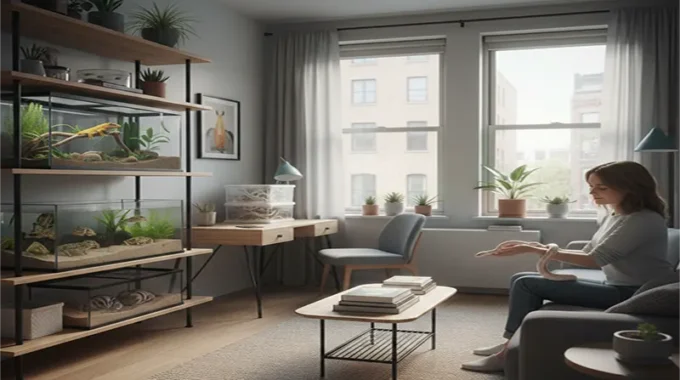
- Space Optimization: Utilize vertical space with taller terrariums for arboreal species. Custom shelving can integrate enclosures seamlessly into your decor.
Embracing an exotic pet can transform your small apartment into a unique sanctuary. These low-maintenance companions offer quiet companionship, fascinating behaviors, and a touch of the extraordinary without overwhelming your limited space or busy schedule. From the serene observation of a crested gecko to the playful antics of a parrotlet, there’s an apartment-friendly exotic pet waiting to bring a little wild wonder into your urban life. Just remember, “low maintenance” doesn’t mean “no responsibility” – but with the right research and care, you can provide a fantastic home for these remarkable creatures.